Saturday, December 17, 2011
Maple Ice Cream
Tuesday, December 6, 2011
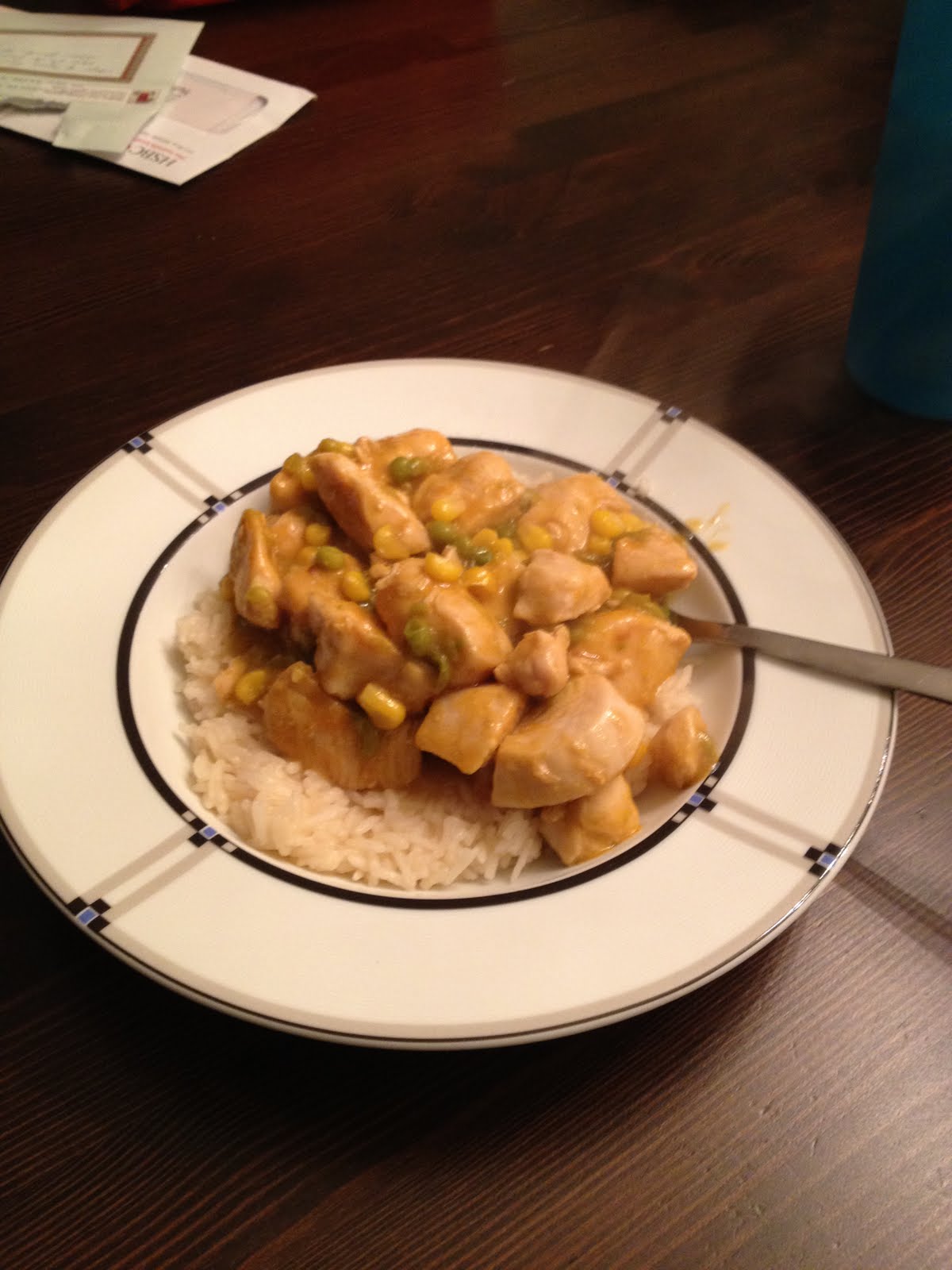
General Goldberg's Chicken
Saturday, November 12, 2011
Wienerpunsch
Of course, I've always wanted to club my own baby seal, but that's just me.
In any case, one of my favorite things to do was wander the streets of Vienna, gradually growing colder. When I got cold enough, I would just stop at a nearby Punsch stand and buy a mug of Punsch, then be warmed up and walk on a little further. Punsch is punch, of course, but they had dozens of flavors and varieties, all of it hot, refreshing, and nicely alcoholic. I finally asked what went into making them, and I was told that they used a nice red wine, some tea, and fruit juice. Hunh, thought I. Not what I expected.
I miss Punsch, so I decided that tonight I'm going to make some. My recipe will be as follows, although possibly halved. When you drink it, think of the beautiful city of Vienna, where I smoked in the Natural History Museum.
12 cups red wine
4 cups of black tea
2/3 cup of Austrian rum (80vol% alcohol), if you have to use carribean rum, take 1 1/3 cup
6 cups fresh orange juice
1/2 cup sugar
2 sticks of cinnamon, a few cloves
some orange peel
Put everything into a big pot and gently heat but do not boil. Remember that alcohol boils at 79 degrees C, so if you heat it too much, you'll drive off all the lovely alcohol.
Edit: The verdict is in- both Kirsten and I think it tastes exactly like what we had in Vienna. I made up the black tea (Lipton's) and set it aside to steep. Once it had, that went into an enamelled cast iron pot. Still ery hot, but nowhere near boiling. Heat was turned on underneath and ~ 2 liters of a red cabernet was added (an inexpensive box wine). I dumped in a fifth of Bacardi silver (200 mL). I was running low on space by that point, so I only added ~2 cups or so of orange juice (poured in without measuring). 1/2 cup sugar was on the money, 2 short but fat cinnamon sticks and 5-6 cloves were added as well as the zest of one orange. Because the tea was so hot, this required very little heating to get it where it was going, and it was greatly enjoyed by all on such a cold night as this. I will definately be making it again in the future!
Saturday, September 24, 2011
Mayonnaise - in praise of the Real Hellmans
One of the horrors of "localisation" of brand foods is what is done to Hellman's Mayonnaise in the UK. Obviously it's what the company believes is preferred by British consumers. But as I'm not, I find the UK product completely alien. I've been lucky in recent years to have visiting family and friends haul over jars of Hellman's when they visit. But now I'm running on fumes so I'll have to make homemade American recipe mayo now.
Btw: Commercial mayonnaise sold in jars originated in New York City, in Manhattan's Upper West Side. In 1905, the first ready-made mayonnaise was sold by a family from Vetschau, Germany, at Richard Hellmann's delicatessen on Columbus Avenue, between 83rd and 84th Streets. In 1912, Mrs. Hellmann's mayonnaise was mass marketed and called Hellmann's Blue Ribbon Mayonnaise.
Here's the basic recipe. Details to follow after I make a batch tomorrow with my stick mixer (immersion mixer) and document the process.
2 large egg yolks
1 Tbs. lemon juice
1/4 tsp. salt
pinch of white pepper
1 cup oil - this should be a "tasteless" oil like sunflower, safflower, grapeseed, or canola (rapeseed)
Important: All ingredients must be at room temperature before you start this recipe.
Traditional way to make mayo:
Add first 4 ingredients to a bowl and whisk until combined and light.
Whisking vigorously add the oil 1 drop at a time, whisking after each drop until it disappears into the mixture (about 8 strokes/2 seconds).
After you have added about 1/3 of the cup of oil, and the mixture has thickened a lot, start adding the rest of the oil in a slow very thin stream.
When all the oil has been added and the mix is thickened - taste and add additional lemon juice and seasoning to taste, whisking it in smoothly.
You can add crushed/mashed garlic to the mayo to create aioli or minced tarragon or other hebs. The add-ins are endless.
My way to make mayo (quick and easy)
I use a stick mixer and a narrow cylindrical container to make mayo in under 30 seconds.
I'll add details and photos tomorrow afternoon.
And..in later news...my daughter has generously offered me her last jar of US Hellmans Mayo which I will eagerly collect tomorrow.
Saturday, September 3, 2011
Labor Day Limeaide
In all seriousness, there is this particular ratio in limeaide and lemonaide that if you get just a little bit off, it tastes wrong. It's too watery, too sweet, too sour, whatever. So, today being Saturday of the Unofficial Last Weekend Of The Summer, I went food shopping, and lemons and limes were on sale. I always promise myself that I'm going to make limeaide, but as tonight is gaming night, I thought it would be a really nice treat to have some icy cold, handmade limeaide on hand.
Oh yea- commercial stuff always sucks. Something about simple syrup tastes weird to my tongue. And commercial stuff always has the taste of the zest. I like candied orange, lemon and lime peels. But not in my lemon/limeaide.
You need a ~ 2 liter pitcher, preferably one with demarkations on the side. I rolled and squeezed 8 limes, which gave me just a hair under 500 mL. Yes, we're doing this metric. Deal with it. Add three tablespoons white sugar, stir with wooden spoon. It should readily dissolve. Add 1.5 L water so it hits the 2L mark. Taste. I thought it was still a bit too sharp, so I added one more tablespoon sugar. I add the last sugar at the end, because I prefer to be wary of how I flavor the end product. But 0.5 L lime juice, 1.5 L water, 4 tablespoons sugar? Fantastic. It's in the fridge chilling right now.
I'm not going to lie, I'm writing this up here more so that I can refer to it in the future than for you folks.
Wednesday, August 10, 2011
Apple Strudel
So, I finally gave up and decided to make it myself. I've made apple strudel for many years when I couldn't buy the real stuff at a good Jewish/German bakery but never tried in London as the apples in the UK are nothing to write home about. They're great for cider and make very tasty apple sauce but they just aren't pie apples being the wrong texture and generally insipid. However, yesterday a neighbour stopped by with a bag of apples she had just picked from an old tree on her allotment garden. They looked gorgeous and the flavour - wow, spicy and sweetly tart, yum! Strudel and pie - here we come!
So, here's the recipe. If you are in the US, try using Winesap apples or similar spicy, strongly flavoured firm apples.
Ingredients for the filling:
800g/1lb 12oz cooking apples, peeled, cored, cut into small chunks
50g/2oz unsalted butter
100ml/3 fl oz water
100g/3½ oz caster sugar (granulated sugar in the US) - cane sugar, please!
1/2 to 1 tsp ground cinnamon - to taste
large handful of fresh breadcrumbs (you must use fresh, not bought dried stuff)
Optional: 3 Tbsp raisins soaked in rum or OJ to plump them (I'm a purist and omit these.)
For the pastry:
50g/2oz unsalted butter, melted
5 sheets filo pastry
fresh breadcrumbs
icing/confectioners sugar, for dusting
Greaseproof/baking parchment paper
Preparation method
1. If you are going to use raisins, soak them in a bit of rum or OJ before starting.
2. Peel, core, and cut apples into small chunks.
3. Cook the apples in a pan with the butter, water and sugar for 5
minutes, or until the apples have softened slightly, but still retain their
shape and are al dente.
4. Remove the pan from the heat, add the cinnamon, raisins (if you're using them)
and the breadcrumbs and stir to combine (the breadcrumbs will bind
everything together). Set aside to cool.
5. Preheat the oven to 180C/350F
6. For the pastry, cut a piece of greaseproof paper a little larger than your
baking sheet to assemble the strudel on. This will also help you to roll it into
the assembled shape. Unroll the filo dough sheets and cover with a dish
towel to prevent it drying out. Spread out one sheet of filo on the paper,
and brush with the melted butter. Lightly scatter with a bit of the breadcrumbs
and a bit of sugar. Repeat the process with all four sheets, placing
them on top of each other, brushing with melted butter each time and
scattering a bit of bread crumbs and sugar on each.
7. Spoon the apple mixture along the long side of the pastry about an inch from
the edge and roll up, longest side first, into a parcel, seam-side down. If you
have too much apple mix, just hold that aside. You can either roll the finished parcel
onto the baking sheet and discard the paper or trim the paper a bit and use that to
lift the parcel onto the baking sheet and let it bake on the paper.
Press down the ends of the parcel gently to seal in the filling.
8. Brush all over with the remaining butter and bake in the oven for 25 -30 minutes,
or until the top is crisp and golden-brown. (Check the strudel after 15 minutes;
if it is browning too quickly, reduce the heat a little. )
9. Remove from oven and allow to cool on the baking sheet. When cooled, carefully
slide the strudel onto a platter or cutting board and dust with icing/confectioners sugar.